Teach AAPI History
As American History.
An inclusive, two-day civics and history lesson package designed explicitly for U.S. history classrooms. Completely free, ready to implement, and requires zero extra prep time.
The Project Dossier
The AAPI Mirror is an initiative to embed Asian American and Pacific Islander voices into standard, required social studies instruction. Because high-quality history should never be paywalled, this entire package is 100% free and open-access.
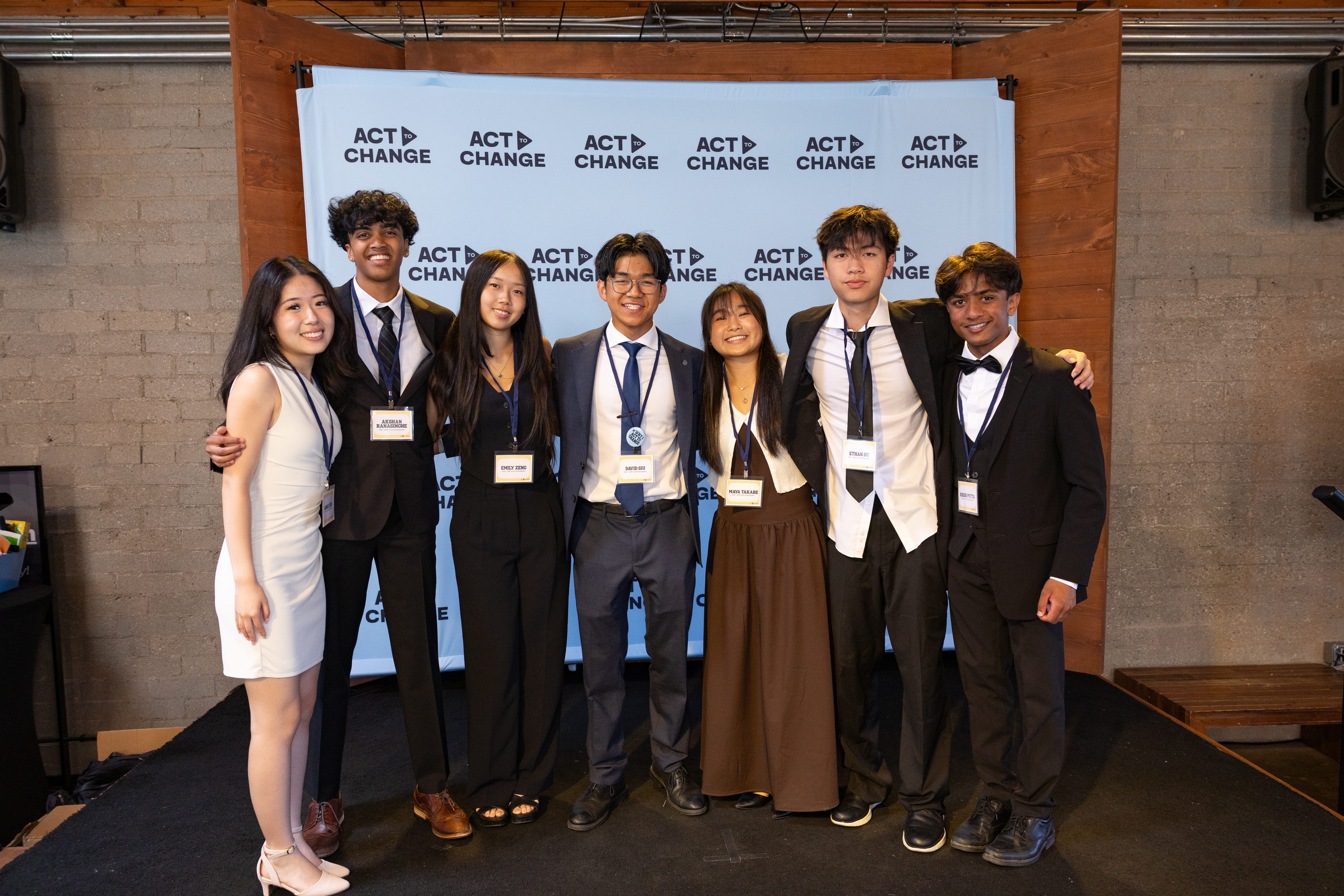
Developed by Akshan Ranasinghe as an Act to Change Youth Ambassador project, the mission operates on a fundamental truth: representation fights discrimination.
Note on Teacher Autonomy: We provide all worksheets, slide decks, and materials. However, teachers retain full discretion to modify, copy, and adapt everything to best align with institutional pacing and needs.
Built for Educators.
Originally designed and piloted in a medium-sized school district in a Mid-Atlantic state in the United States, these lesson plans are built for History Teachers, Social Studies Department Chairs, and District Curriculum Coordinators everywhere.
It provides a rigorous, engaging, and standards-aligned framework without the burden of lesson creation.
Curricular Erasure.
AAPI narratives are frequently omitted or reduced to a single passing paragraph in standard U.S. history curricula. This erasure isolates AAPI students and deprives all students of a complete, accurate understanding of American civil rights, immigration policy, and civic duty.
Free, Plug-and-Play Integration.
The AAPI Mirror does not demand you rewrite your syllabus. It is a supplemental framework perfectly aligned to drop into existing Reconstruction or Industrialization units. We provide the slides, primary sources, teacher guides, and worksheets for frictionless implementation.
Lesson Architecture
Wong Kim Ark & National Identity
Objective: Students analyze the Supreme Court’s interpretation of the 14th Amendment, evaluating historical context and the modern implications of birthright citizenship.
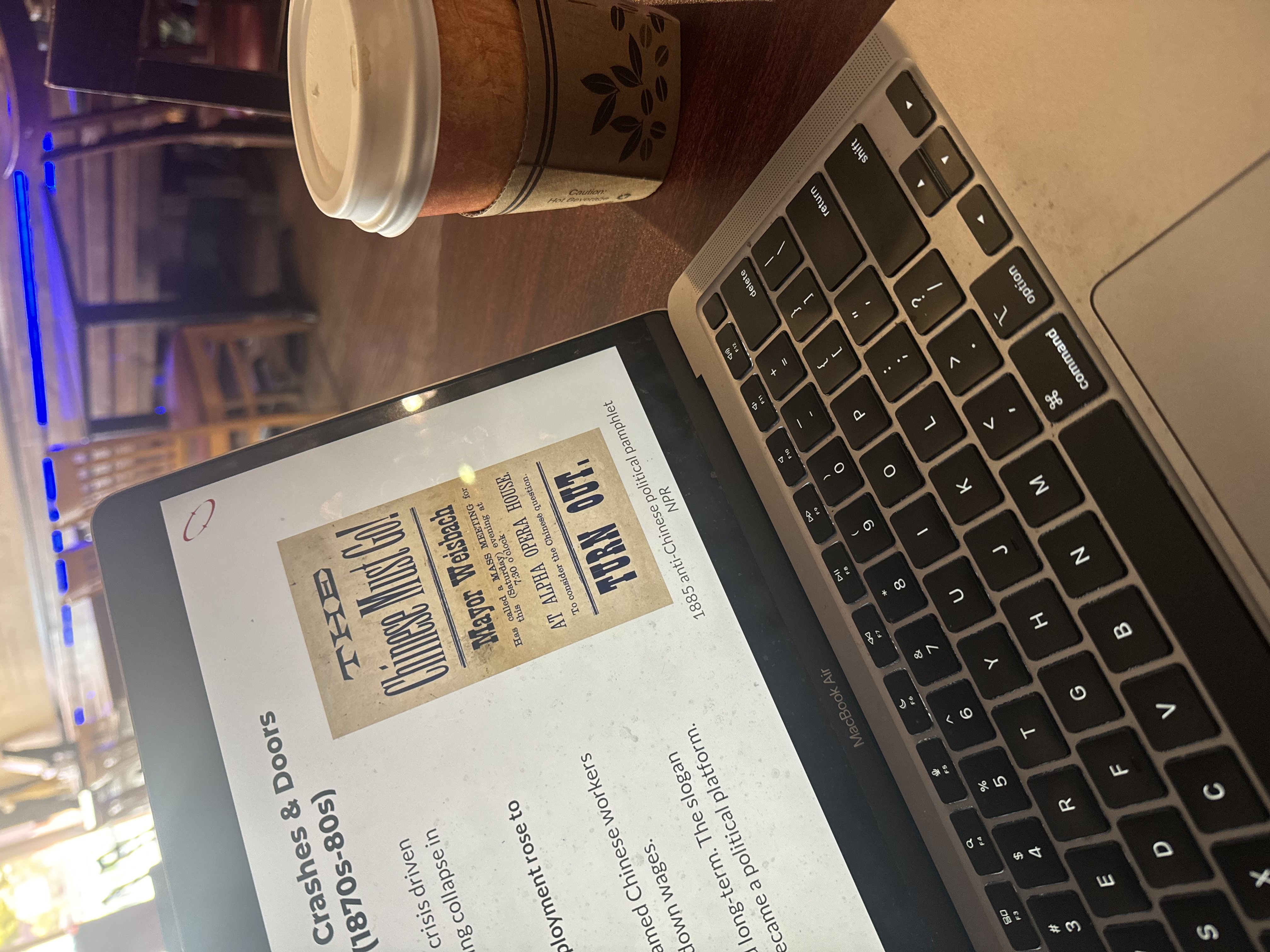
- ARTIFACT 01 Visual Analysis: Class discussion decoding the 1882 political cartoon "The Anti-Chinese Wall".
- CONTEXT The Exclusion Era: Examining the Gold Rush, the railroad era, and the resulting economic backlash.
- DOC. REVIEW Primary Source Worksheet: Students critically analyze an excerpt from the Majority Opinion of the 1898 Supreme Court case United States v. Wong Kim Ark.
- EXIT TICKET Synthesis Prompt: "How would America be different today if Wong Kim Ark had lost his case?"
Local Identity & The Legislature
Objective: Foster an understanding of legislative decision-making by balancing stakeholder interests with ethical considerations using real-world representation.
- MODERN VOICES Video Introductions: Custom greetings from real AAPI leaders: State Senator Clarence Lam, Delegate Chao Wu, or Delegate Harry Bhandari.
- SIMULATION The Balancing Act: Table groups assume legislator profiles to debate and vote on real-life state bills:
- HB 1323: AAPI History Curriculum
- SB 528: Climate Solutions Now Act
- HB 471: Foreign Ownership of Ag. Land - CIVIC ACTION Reflection Postcards: Students hand-write physical postcards detailing why representation matters to them, which are mailed directly to delegates.
Methodology & Framework
The AAPI Mirror intentionally abandons passive learning models. To successfully embed complex AAPI historical narratives into a U.S. history classroom, the lessons rely on four core pedagogical pillars designed to maximize student engagement, accessibility, and critical thought.
1. Historical Inquiry & Analysis
Instead of memorizing dates, students act as historians. By decoding 19th-century legal documents (the 1898 Wong Kim Ark ruling) and analyzing political cartoons ("The Anti-Chinese Wall"), students engage in structured, non-partisan primary source evaluation.
MEETS STANDARD 6.0: SKILLS & PROCESSES2. Universal Design (UDL)
Rigorous history must be accessible history. The lesson plans are differentiated to provide "translated" modern-English primary sources, scaffolded vocabulary banks, and structured graphic organizers to support all learners.
ACCESSIBILITY FIRST3. Active Civic Simulation
We bridge the 1890s immigrant experience directly to modern Maryland society. Students transition from reading history to *making* it by assuming the profiles of real-life AAPI legislators. In table groups, they must actively balance constituent needs, opposition pushback, and ethical outcomes to vote on actual, current state bills.
MEETS STANDARD 1.0: CIVICS4. Empathy via Representation
The psychological core of the project: Representation fosters empathy. By highlighting AAPI voices as central actors in the fight for American civil rights, the lessons validate AAPI students while demonstrating to *all* students that AAPI history is fundamentally American history.
MEETS STANDARD 2.0: PEOPLES OF THE NATIONBroad Impact & Reach
Students directly engaged through rigorous, standards-aligned AAPI history and civics coursework.
Adopted across public school districts serving over 50,000 students, scaling systemic curricular inclusion.
Active instructional implementations in dozens of individual secondary U.S. history and civics classrooms.
Secondary social studies educators equipped with turnkey primary sources, slide decks, and pacing guides.
Featured on TAAF's AAPI History Hub
Curated by The Social Studies Accelerator and The Asian American Foundation (TAAF) for the AAPI History Hub, reaching educators nationwide.
Our curriculum on United States v. Wong Kim Ark and 14th Amendment birthright citizenship is highlighted as a vetted, turnkey classroom resource for K–12 social studies departments across the United States.
View Resource on AAPI History Hub
Secondary Educator Training
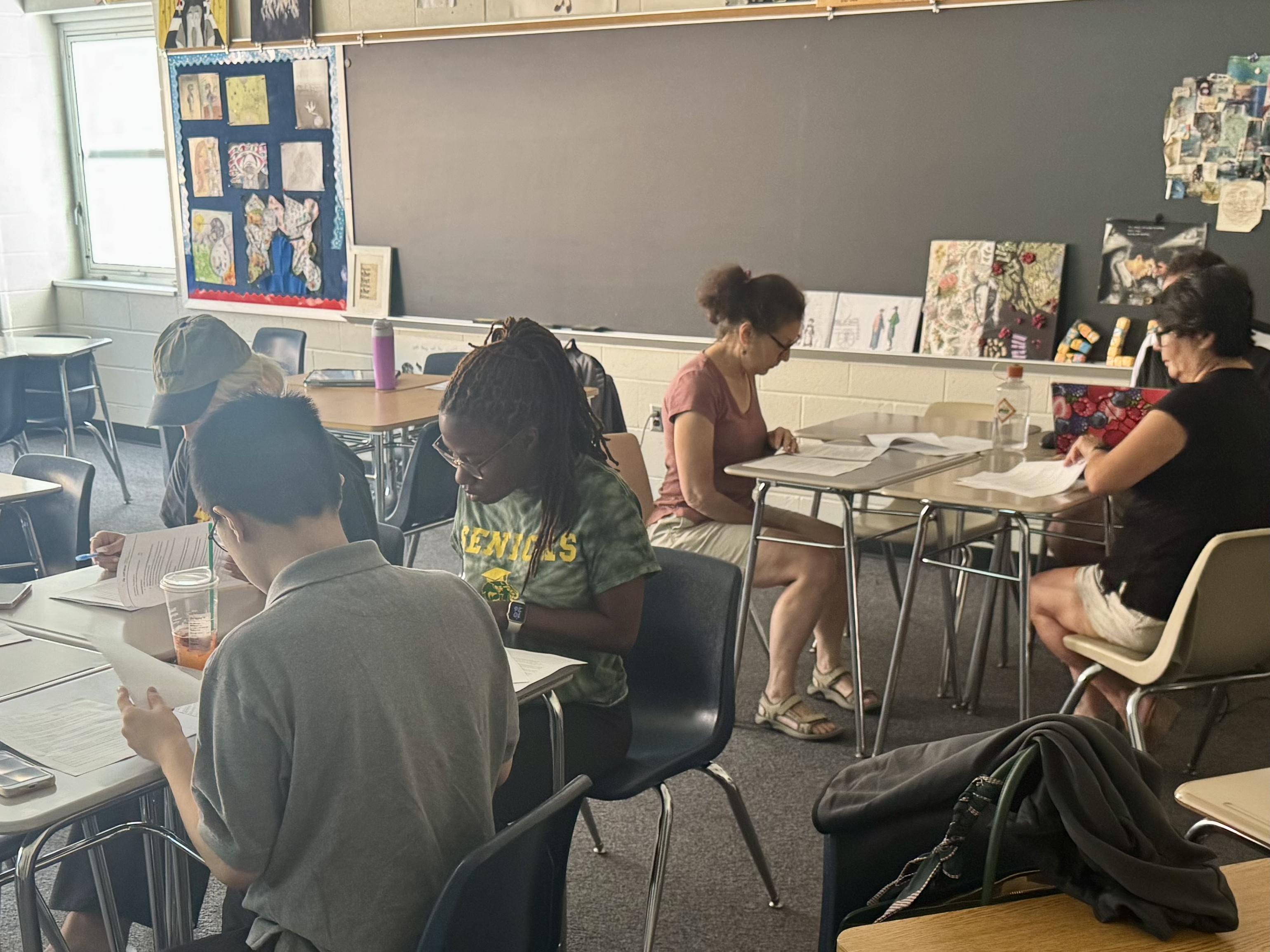
Trained 50+ secondary history educators across a top-ranked Maryland district, equipping classrooms with turnkey civics and history toolkits.
Providing department chairs and classroom teachers with standards-aligned primary source sets, scaffolded vocabulary banks, and constitutional simulation guides to institutionalize AAPI civil rights into standard pacing.
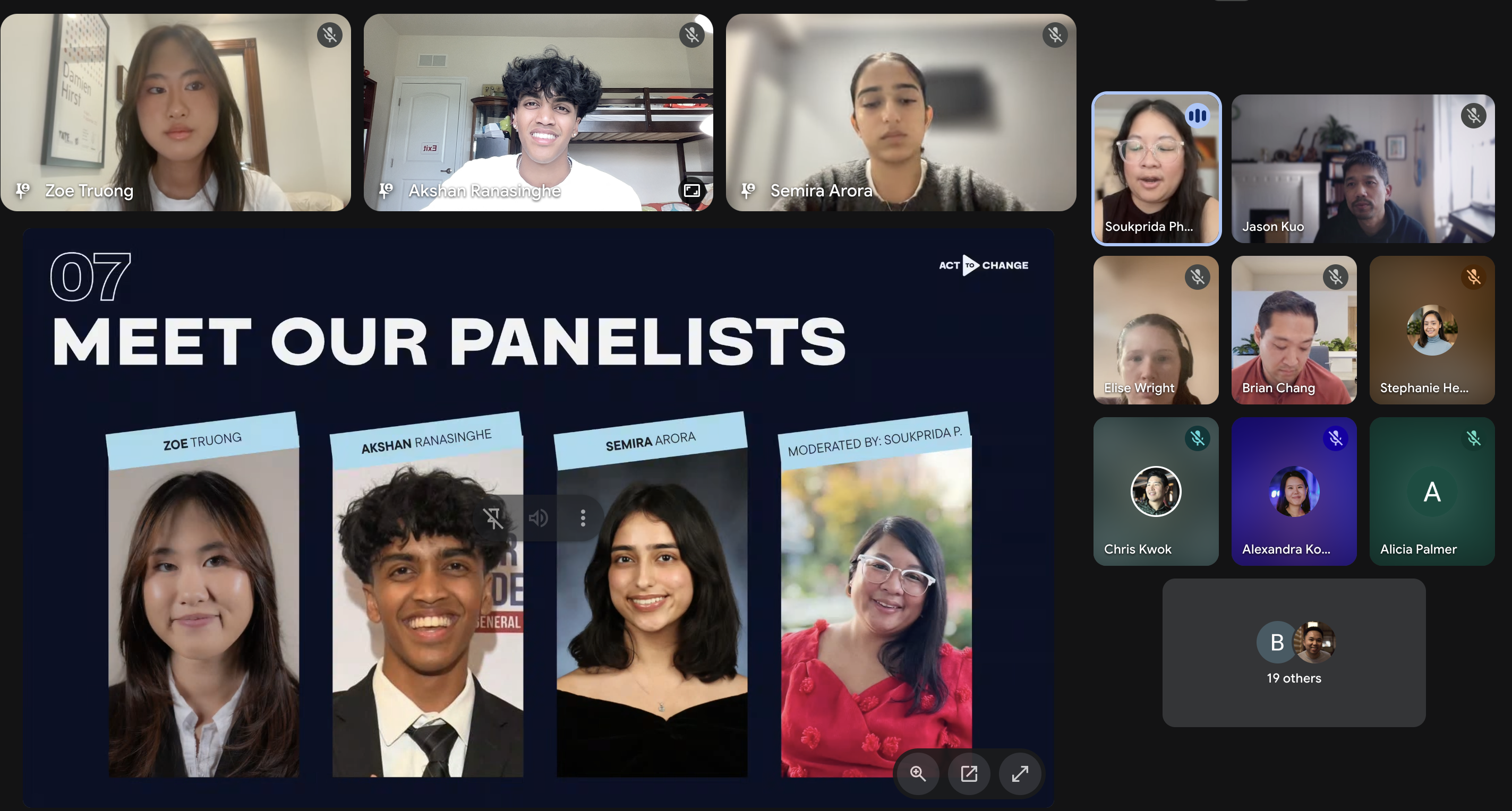
Thumbtack Corporate AAPI ERG
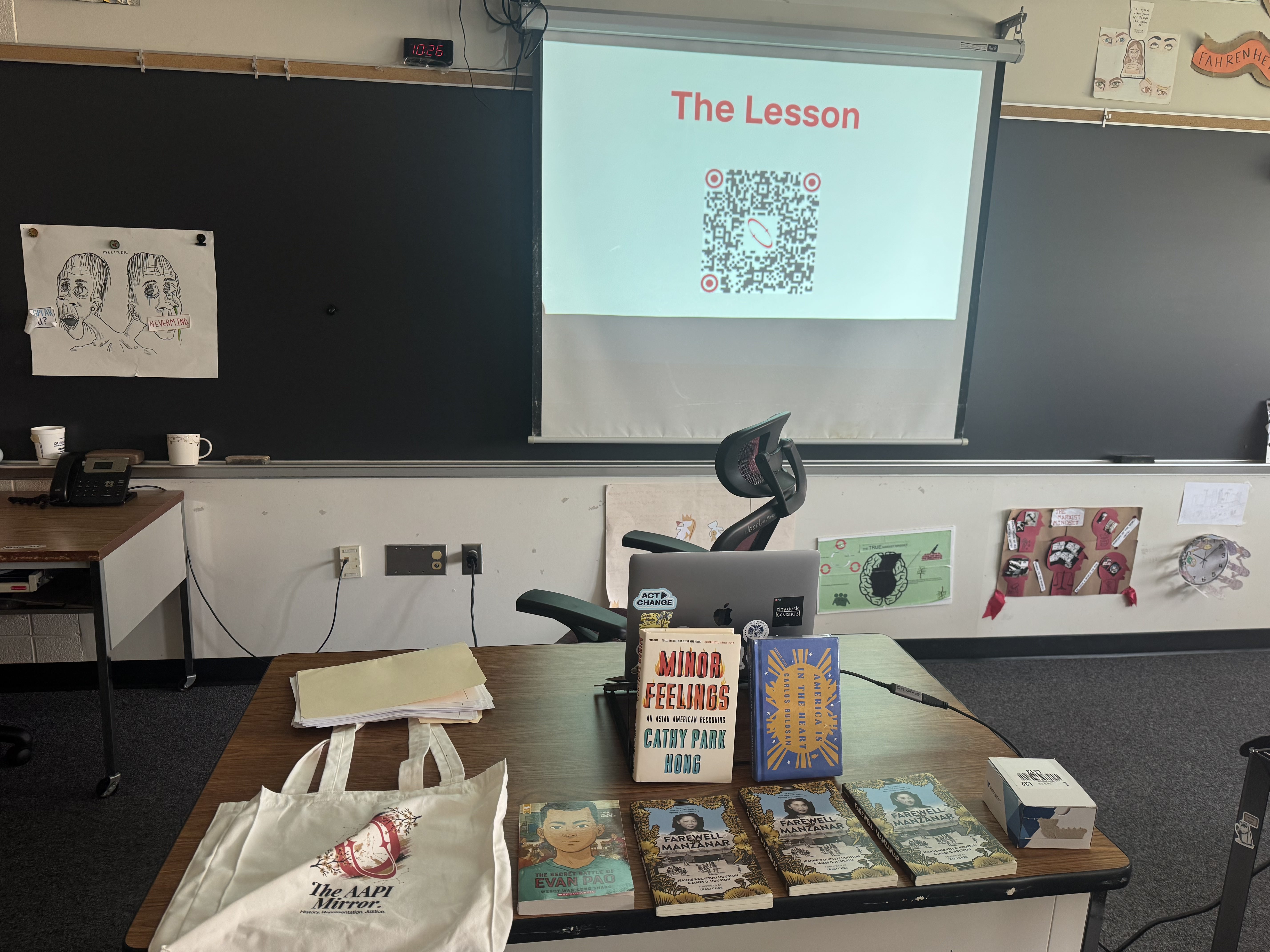
Featured at Thumbtack’s Corporate AAPI ERG, advancing cross-sector dialogue on youth civic agency through the AAPI Mirror.
Bridging grassroots classroom innovation with corporate diversity and inclusion initiatives, demonstrating how youth-led curriculum reform drives systemic belonging and historical literacy beyond schools.
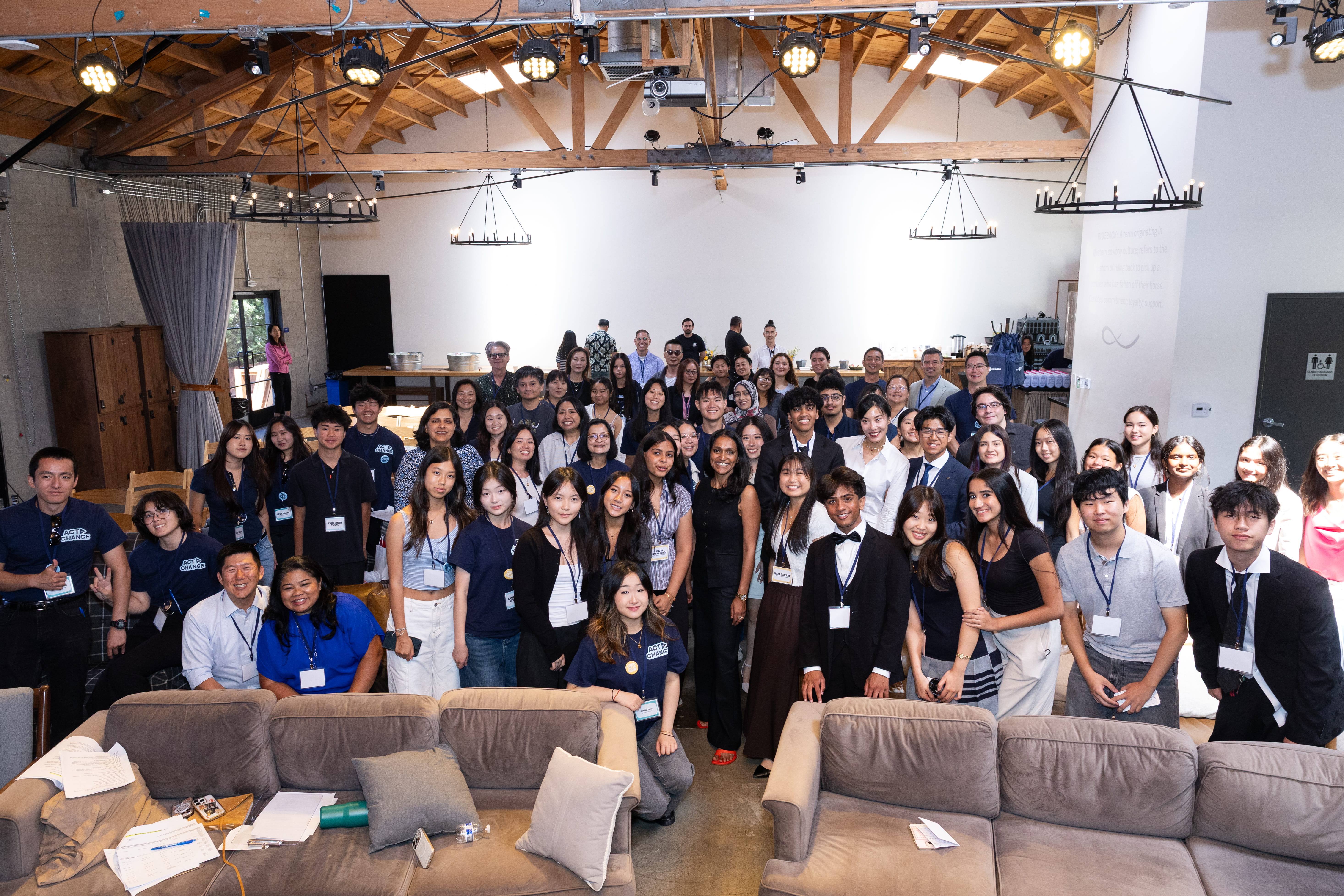
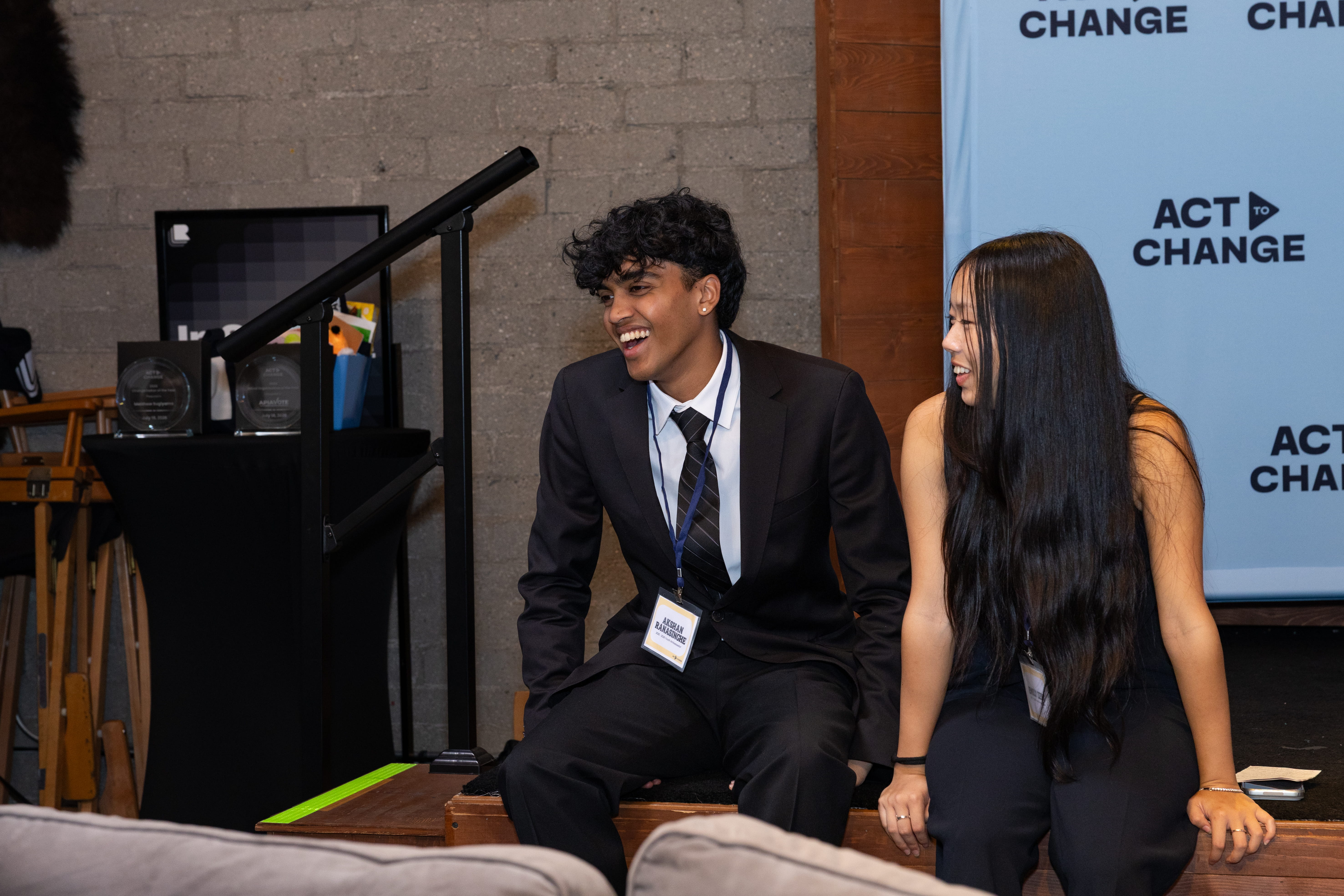
The 2026 Act to Change Youth Summit.
Youth Ambassadors from across the country convened in Los Angeles to build the next generation of anti-bullying and AAPI representation projects — where The AAPI Mirror was presented and vetted in front of national stakeholders.
The Lesson Pilot
Following classroom implementation, a post-lesson reflection survey evaluated academic comprehension, civic awareness, and student reception. The findings quantify an acute curricular gap—and demonstrate the immediate impact of targeted AAPI history instruction.
of surveyed 8th graders reported they had never previously heard of Wong Kim Ark or the Chinese Exclusion Act before this lesson.
of students rated their post-lesson understanding of the 14th Amendment and birthright citizenship at a 4 or 5 out of 5.
Average rating when asked if historical exclusion made them more likely to stand up for peers facing unfair treatment today.
of students explicitly recommended that lessons like this remain a permanent part of the required history curriculum.
"It makes me realize that Asian hate goes back to the 1800s, and it's been a problem that has been around for a long time."
8th Grade Student"I wish that our curriculum did a better job including all forms of discrimination instead of only focusing on more widely known conflicts."
8th Grade Student"It makes me realize just how unfair this is, and that no one should blame others when they're desperate not to blame themselves."
8th Grade Student"I'm more likely to stop future racism and hate against Asian Americans."
8th Grade Student"Most of [our district] is Asian. Asians need more representation... so they can better understand their own and their peers’ rights."
8th Grade Student"We should remember the history, and never do the same mistake again."
Survey Response — 8th Grade StudentPartnerships
Rooted in Anti-Bullying Advocacy.
The AAPI Mirror was conceived, developed, and initially funded through the Act to Change Youth Ambassador Program. Created by Akshan Ranasinghe, the project directly aligns with the organization's mission to combat hate by fostering empathy and understanding in the classroom.
We believe that education is a primary vehicle for systemic change. By institutionalizing AAPI narratives into required history coursework, this partnership proactively fights bullying through the power of representation.
A national nonprofit organization working to address bullying, including in the Asian American and Pacific Islander (AAPI) community. They empower youth to lead, advocate, and foster inclusive communities.
Visit ActToChange.orgVetted for Classrooms Nationwide.
Following its district-wide integration in Maryland, The AAPI Mirror was vetted and selected for national distribution on the AAPI History Hub. Developed through a partnership between The Social Studies Accelerator (SSA) and The Asian American Foundation (TAAF), the Hub serves as a premier clearinghouse for inquiry-based, classroom-tested AAPI instructional materials.
We believe that widespread adoption depends on lowering the barrier to entry for teachers. By pairing our zero-prep, C3-aligned civics modules with the Hub’s national reach, this partnership ensures educators across all 50 states have direct access to rigorous materials that move beyond narratives of victimhood and highlight civic agency.
A centralized educational platform developed by The Asian American Foundation (TAAF) in collaboration with The Social Studies Accelerator (SSA). The Hub curates and distributes vetted, high-impact social studies resources to help K–12 educators teach comprehensive Asian American history nationwide.
View on AAPI History HubThe Policy Report
WORKING PAPER
THE AAPI
MIRROR
A Framework for Inclusive History
Peer-Indexed Research.
Built for the Classroom.
The AAPI Mirror's founding working paper synthesizes peer-reviewed scholarship in Culturally Relevant Pedagogy (CRP) with original pilot data collected from over 60 students to make a rigorous, evidence-based case for AAPI history integration in K–12 curricula nationwide.
Grounded in the C3 Framework, Supreme Court precedent, and the landmark Dee & Penner (2016) study demonstrating CRP's causal impact on GPA and attendance, the report delivers actionable policy recommendations for district administrators, educators, and state legislators.